

We have filmed inside a lot of industrial facilities. Compressor plants, packaging operations, power electronics, containment systems. The products are different every time and the brief arrives with roughly the same problems in it.
None of them are about production quality. They are about what the video is being asked to do.
Leading with the machine instead of the problem it solves
The most common brief is a tour. Here is our facility, here is the line, here is the machine, here are the certifications. It is accurate and it is the version the engineering team is most comfortable with, and almost nobody outside the company watches it to the end.
The buyer is not evaluating your equipment in isolation. They have a problem, usually expensive, and they are trying to work out whether you understand it. A film that opens on the problem and arrives at the machine as the answer holds attention in a way that the tour never does, and it is the same footage either way.
Assuming nobody wants to see the factory
The opposite mistake, and it shows up just as often. Companies who have decided their plant is not interesting and want everything shot in a clean studio against white.
A working facility is one of the most visually interesting environments there is. Scale, heat, sparks, precision, people who are extremely good at something difficult. Competitors selling the same product cannot show your floor. It is the one asset in the brief that is genuinely unrepeatable, and it gets left out because the people who work there every day have stopped seeing it.
Underestimating what access costs
This is the practical one and it catches people out.
Filming inside a live operation means safety induction, escorts, restricted zones, protective equipment, and often a line that cannot stop for you. Some areas need the shoot to happen during a planned shutdown, which puts a date on the project that has nothing to do with the marketing calendar.
None of that is a problem when it is planned for. It becomes a problem when a crew arrives and discovers half the shot list needs approval that takes two weeks. Bring your operations lead into the conversation early, before the schedule is set. They will tell you in ten minutes what would otherwise surface on the day.
Treating it as one video instead of a year of assets
A shoot inside a facility is expensive to set up and comparatively cheap to extend. The crew is there, the access is granted, the safety briefing is done, the lighting is up.
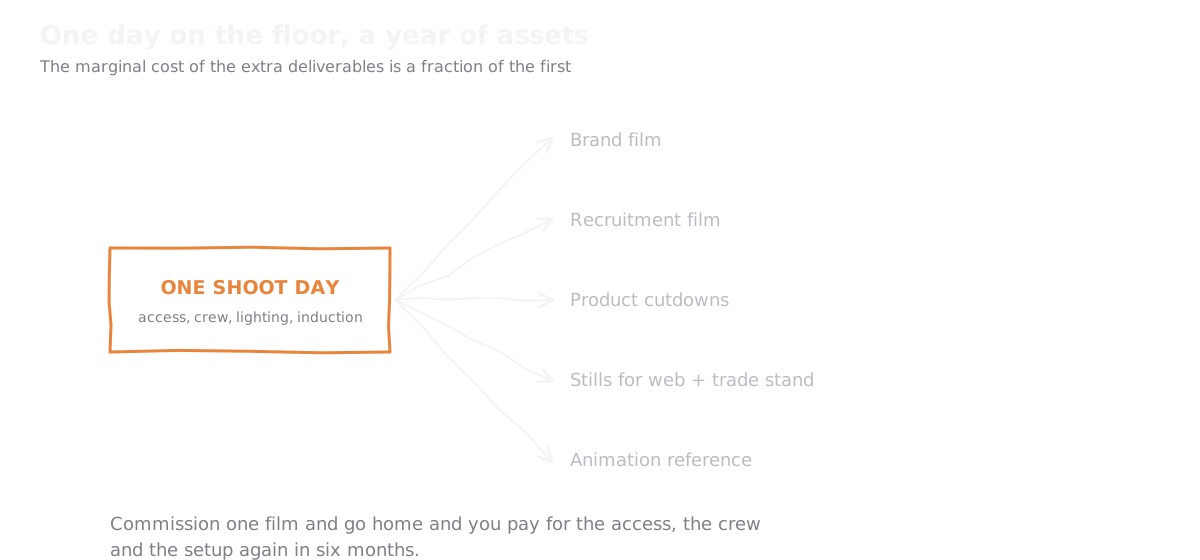
Most manufacturers commission one brand film and go home. The same day could produce the brand film, recruitment content, product-specific cutdowns, stills for the website and the trade stand, and animation reference for whatever cannot be filmed. The marginal cost of the extra deliverables is a fraction of the cost of coming back in six months and setting it all up again.
That is the single biggest efficiency available in industrial production and it gets missed because the brief was written for one video.
Your own people are better on camera than you think
Manufacturers reach for professional talent more often than they need to, usually out of a worry that their own staff will freeze up.
In our experience the opposite is closer to true. A machinist explaining the tolerance they work to, or a plant manager describing a problem they solved, carries a credibility that no actor delivers. They are not performing expertise, they have it. The camera picks up the difference and so does the buyer.
Two things make it work. Talk to them about what they do rather than asking them to recite a script, because the moment someone is reading marketing language they stop sounding like themselves. And give them a real amount of time, not ten minutes squeezed between shifts. Most people need twenty minutes of talking before they forget the camera is there, and the usable material almost always sits after that point.
The other thing this buys you is internal. A film with your own people in it gets shared by your own people, which is the cheapest distribution there is.
Nobody plans for the things that cannot be filmed
Every industrial brief has something in it that a camera cannot reach. What happens inside a sealed vessel. A process that runs at a scale or speed the eye cannot follow. A component buried three assemblies deep. Sometimes a product that is still in development and does not physically exist.
The mistake is discovering this at the shot list stage, when the budget is already allocated to shoot days.
If the thing your product does best is invisible, that is an animation question, and it needs to be scoped alongside the live action rather than bolted on afterwards. Deciding early also changes what you shoot: knowing a cutaway sequence will be animated means the live action can be planned to hand off to it cleanly, instead of trying to cover something the camera was never going to see.
Recruitment is the use case nobody briefs for
Almost every industrial brief we receive is aimed at buyers. Almost every industrial client we work with also has a hiring problem, and usually a worse one.
Skilled trades are hard to fill, the competition is every other plant within driving distance, and the job listing on your careers page is doing none of the persuading. Someone deciding where to take their skills is choosing between employers, not reading a spec sheet, and almost nothing in the average manufacturer’s marketing speaks to them at all.
The useful part is that it is largely the same shoot. The floor, the machinery, the people who are good at their jobs, all of it works for both audiences. What changes is the question the film is answering. A buyer wants to know whether you can solve their problem. A candidate wants to know what it is like to work there, who they would be working alongside, and whether the place takes them seriously.
Shoot a brand film and a recruitment film on the same day and the second one costs a fraction of the first. Shoot them six months apart and you pay for the access, the crew and the setup twice.
What to do differently
Write the brief around what the buyer needs to understand rather than what you want to show. Assume the floor is an asset until someone proves otherwise. Get operations in the room before the date is fixed. Ask early what cannot be filmed. And scope the day for the year, not for the one film.
Most motion projects we run for manufacturers land between $50,000 and $125,000, and the ones that return the most are consistently the ones that came out of a single well-planned day rather than three separate visits. Those are ranges rather than rules, and the right number depends entirely on what the work has to do.
In summary
- Lead with the problem your buyer has, not the machine that solves it. It is the same footage either way.
- Your factory floor is the one asset in the brief a competitor cannot show. Assume it belongs in the film until someone proves otherwise.
- Access takes longer than anyone plans for. Get your operations lead into the conversation before the date is fixed.
- Your own people are more credible on camera than hired talent, given enough time to forget the camera is there.
- Scope the day for a year of assets, recruitment included. The second film off the same shoot costs a fraction of the first.


