

Most marketing teams approach this backwards. They write a brief, send it to three production companies, wait two weeks, and use the quotes that come back to work out what the project costs. Then they discover all three are above what anyone was ever going to approve, and the project quietly dies in an inbox.
The number existed the whole time. Nobody said it out loud.
You already know your ceiling
Here is the thing worth sitting with. When a project dies because the production company was too expensive, that means somebody knew what too much was. The ceiling was there before the first call. It just was never articulated, so nobody could design against it.
That is the whole problem in one sentence. A budget nobody has named is still a budget. It just does its work at the end of the process, as a rejection, instead of at the start, as a constraint.
You do not need an approved number to have a useful conversation. You need a range, and you almost certainly already have the information to produce one.
Work top down, not bottom up
The instinct is to add up what things cost. A shoot day, a crew, an edit. That approach fails because you do not know those numbers, and guessing at them produces a figure with no relationship to what your organisation would actually sign.
Start from your side of the table instead.
What is the annual marketing budget? Roughly what share of it goes to content and production? How much of that is uncommitted for the rest of the fiscal year? Is this project the whole of that or one of several things it has to cover?
Then the question most people skip, and the one that matters most: what number can you approve without asking anyone? The number you can sign alone and the number you could get signed are different, and both are useful to know before you are sitting in a meeting.
If that does not produce a number, try the ceiling test
Some people genuinely cannot answer “what is your budget”. Almost nobody fails to answer these three, and they carry the same information.
At what number would you say yes without hesitating? At what number would you have to build a case and take it upstairs? At what number would you say no immediately, without checking with anyone?
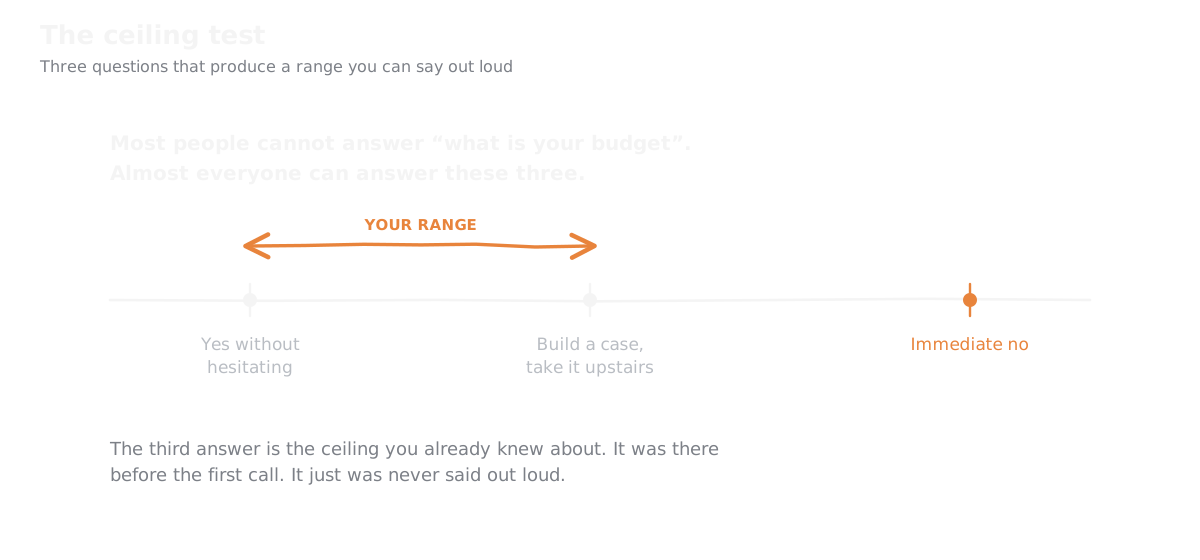
Your range sits between the first two. The third is the ceiling you already knew about. We built a short worksheet that walks through this properly, and it takes about ten minutes. Nothing in it gets sent to us.
What a range actually buys you
There is a fear underneath all of this, and it is worth saying plainly. People withhold budget because they think a production company will simply spend whatever it is told.
A budget is a constraint to design against, not a target to fill. Knowing it early is what lets us put money where it shows on screen and cut the things that do not. Without it we are guessing, and a guess usually means building something ambitious that gets dismantled in a second round of conversations, which is worse for the work than the constraint ever was.
For context on where things land, most of our motion work runs between $50,000 and $125,000, animation starts around $25,000, and standalone photography runs $15,000 to $40,000. Those are ranges rather than rules. Projects land below them and well above them depending on what the work has to do, which is exactly why the conversation matters more than the price list.
What a late budget actually costs you
The cost of not naming a number is rarely a cancelled project. It is a slower, more expensive version of the one you were going to make anyway.
Here is the usual sequence. We build a scope against our best reading of the brief. It comes back too high. Now we are in a re-scoping conversation, which means cutting things that were already designed to work together, which means the film gets weaker in ways nobody intended. Nobody chose to lose the second location or the extra shoot day. They got cut because the number arrived last.
The other version is worse and less visible. The quote comes back under what you could have spent, you approve it quickly because it feels like a win, and you end up with something smaller than the moment deserved. A launch you only get once, covered at two thirds of the ambition it warranted, because nobody mentioned there was more available.
Both of those are avoidable in about ten minutes at the start.
Get the approver into the conversation early
The other thing that derails budgets is not the number, it is who has not seen it yet.
Most projects at this scale have at least three people in the chain. The person running it, usually a marketing manager or director. The person who signs it, often a VP or a CMO. And sometimes procurement or finance, who care about terms and timing rather than creative.
The failure mode is familiar. The marketing lead and the production company agree a scope, build a plan, and get a long way into it before the signer sees a number for the first time. That signer has not read the brief, does not know why the second shoot day exists, and is looking at one figure with no context. The answer is usually no, and it is a reasonable no.
Ask early who signs this, whether they have seen the brief, and what they will want to know. If the answer is that they have not been involved, get them a one-paragraph version of the goal before anyone builds a quote. It costs an email and it removes most of the risk of the whole thing stalling at the last step.
What to bring to a first call
One sentence. What the work has to achieve, when it needs to exist, and roughly what you have for it.
Any production company worth hiring will tell you honestly what that buys, and will say so when it does not buy what you are describing. If they will not talk about money until they have shown you a treatment, that is worth noticing. The treatment is the easy part.
In summary
- You already have a number. When a project dies because someone was too expensive, the ceiling existed the whole time. It just was never said out loud.
- Work top down from what your organisation has, rather than bottom up from what you think things cost.
- If that does not produce a figure, answer the three ceiling-test questions. Your range sits between the first two.
- A budget is a constraint to design against, not a target to fill. Naming it early is what gets the money onto the screen.
- Bring one sentence to a first call: what the work has to achieve, when it needs to exist, and roughly what you have for it.


