

Clients see the shoot. It is the visible, expensive, slightly glamorous part where a crew turns up and things obviously happen. Then they see the edit, because that is where their feedback goes.
The phase that decides whether either of those goes well is the one they see least of. Almost everything that goes wrong on a production was decided, or not decided, weeks before anyone picked up a camera.
Pre-production is where the decisions get cheap
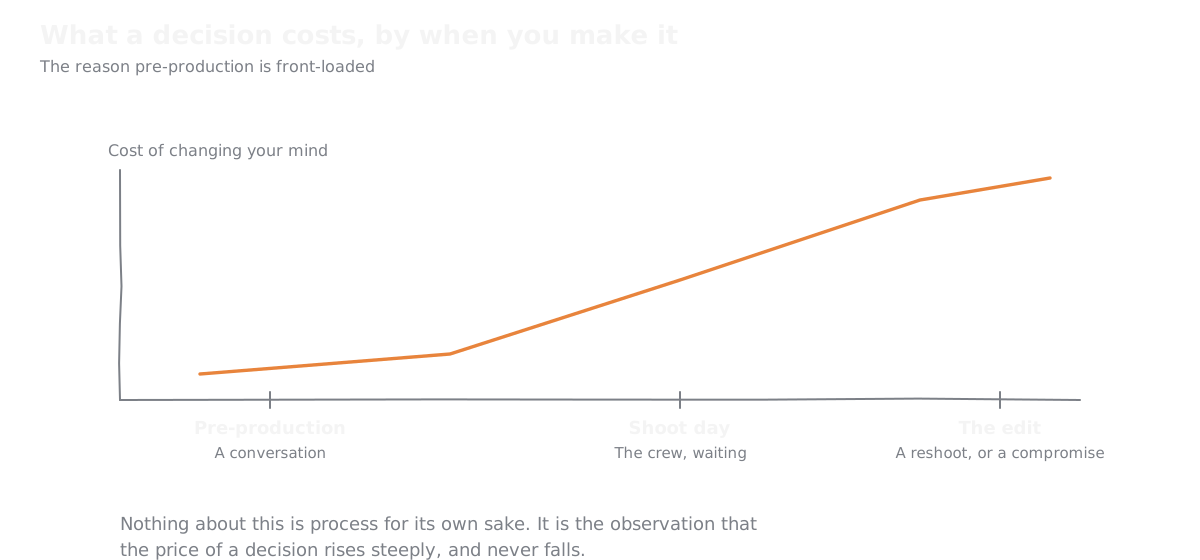
A decision made in pre-production costs a conversation. The same decision made on the shoot day costs the crew standing around while it gets resolved. Made in the edit, it costs a reshoot or a compromise.
That is the whole argument for taking this phase seriously. Not process for its own sake, just the observation that the cost of changing your mind rises steeply and continuously from the moment a plan is agreed.
So the work is front-loaded on purpose. Concept, script, shot list, locations, casting, crew, schedule, and a production plan that accounts for all of it, before a single day is booked.
What the plan actually contains
The document that matters most is the one clients rarely ask to see. It covers what gets shot, in what order, on what day, with which crew and which kit, at which location, with whom in front of the camera, and what the finished deliverables are.
Order matters more than people expect. A shoot day is built around light, location access and talent availability, which means the sequence on the call sheet often has nothing to do with the sequence in the finished film. That is normal, and worth knowing before you turn up and wonder why the ending is being shot at nine in the morning.
The other thing the plan does is force the awkward questions early. Do we need professional talent or real employees. How long do we need the right to use them. Is there a specific piece of music in someone’s head. How many final cuts and formats does this need to become. Every one of those moves a budget, and every one is cheaper to answer now than in three weeks.
Why we scout a location twice
A location that looks right in photographs is not the same as a location you can shoot in, and the gap between those two things is where a shoot day gets lost.
The first visit answers whether it works on camera. Sightlines, backgrounds, how the space reads through a lens rather than an eye.
The second answers whether it works as a workplace for fifteen people. Where the power is and whether it can carry the lighting load. Whether the trucks can get near enough to unload. Where sixty cases of equipment go when they are not in shot. What the noise is like at the hour you will actually be filming, which is rarely the hour you visited. Whether there is somewhere for talent to change and somewhere for everyone to eat.
None of that is glamorous and all of it is the difference between a day that runs and a day that stalls. Filming inside a live industrial facility adds another layer again, because access, safety induction and escort requirements can reshape the schedule entirely.
Casting takes longer than anyone plans for
If real people appear on camera, that decision needs to happen early, and it needs to happen properly.
Professional talent means a casting call, selects, callbacks, availability checks and a usage agreement. That last part is the one that moves budgets late, because the length of time you want the right to keep using someone’s face is a real cost, and buying it in perpetuity is meaningfully more expensive than buying a defined term.
Using your own employees looks simpler and often is not. You need the right people, released from their actual jobs for a day, comfortable enough on camera to be usable, with their manager’s agreement and a signed release. The best person for the shot is frequently the person their department can least afford to lose that morning.
Either way, the answer needs to exist before the schedule is locked, because the whole day is built around who is available and when.
What we need from you, and when
Less than clients expect, but earlier than they expect it.
Front-loaded: the goal, the audience, the deadline, the brand guidelines, the approvals. Who has final say and whether that person has actually seen the brief. A project where the decision-maker appears for the first time at the first cut is a project heading for an expensive conversation.
Then a scout or a pre-production meeting, where the plan gets walked through and anything that is not right gets caught while it is still free to change.
After that, genuinely not much until the shoot. The point of the phase is that by the time everyone arrives on set, the questions have been answered.
What a rushed pre-production looks like later
You can usually tell from the finished film, though not in the way people expect. It rarely looks cheap. It looks thin.
The shots that were supposed to carry the emotional turn are missing, because the day overran and they were at the end of the list. The interview answers are close but not quite right, because nobody had settled what the film was arguing before the questions were written. There is no cutaway to get from one scene to the next, so the edit has a join in it that everybody can feel and nobody can fix.
None of those are shoot-day failures. They are pre-production failures that only became visible weeks later, in a room where the only options left are expensive ones.
Why this is the part worth judging a partner on
A reel tells you a production company can make something look good. It tells you nothing about whether they can make it on time, on budget, and without you having to manage it yourself.
Pre-production is where that second thing lives. It is unglamorous, it does not go in a highlight reel, and it is the reason a shoot day either runs calmly or runs late. When you are evaluating a partner for a motion project, ask what their pre-production process looks like and who runs it. The answer tells you more than the work does.
In summary
- The phase clients see least of is the one that decides whether the shoot works.
- The cost of a decision rises steeply from pre-production to the shoot day to the edit, and never falls.
- Locations get scouted twice: once for how they read on camera, once for whether fifteen people and their equipment can work there.
- Casting, and especially how long you need the right to use someone, has to be settled before the schedule locks.
- Ask a prospective partner what their pre-production process looks like and who runs it. The answer tells you more than the reel does.


