

If you visit a set, you can usually spot the director and producer quickly. The director is talking through a performance or a shot. The producer is watching the schedule and making sure the next setup is possible.
It is easy to conclude that one handles the creative and the other handles logistics. That is roughly true and not nearly enough to explain why both are there. The shoot is where you see the decisions they have been making together for weeks. Neither person’s job ends when the cameras stop rolling.
If you are hiring a production team for a brand story, a campaign, or a video with several stakeholders, it helps to know who is looking after the creative and who is keeping the whole project moving.
The short answer
The director is responsible for how the story is told on screen. They interpret the objective, guide the creative approach and performances, and make decisions about what the audience sees and hears.
The producer is responsible for making that approach possible. They bring the people, plan, resources, schedule, and approvals together so the project can be made within the agreed scope.
That is a useful distinction, but it is not a wall between the two jobs. A director needs to understand practical limits. A producer needs to know which creative choices the project cannot afford to lose. The work is strongest when they develop the plan together.
It begins before there is a set
Imagine a marketing team wants a new video to introduce a change in its brand. It knows the audience and the message it hopes to convey, but it has not decided whether the piece should be built around leadership interviews, customer stories, a scripted narrative, or some combination.
This is where the director starts shaping the storytelling. What should a viewer understand at the end? Whose point of view makes the message credible? What tone fits the brand? The director may help develop a concept, treatment, script, interview approach, visual references, or storyboard.
At the same time, the producer is working out what each approach takes to execute. That means discussing budget and timing, identifying who needs to approve the work, considering locations and talent, and assessing what the team can realistically capture. If an idea requires three cities and the project has room for one shoot day, the producer needs to surface that early.
The result should be a creative direction the client understands and a production approach that can actually deliver it. If those are developed separately, the idea tends to meet the budget for the first time after everyone has fallen in love with it.
What happens in pre-production?
Once the approach is agreed, the director and producer turn it into a plan people can use. This is the phase clients see least of and the one that decides whether the shoot works.
The director works through what needs to be captured to tell the story. Depending on the project, that can mean refining the script, planning interview questions, reviewing casting, creating storyboards, and building a shot list with the cinematographer. They consider how the scenes will connect in the edit, not only how each frame looks on its own.
The producer works through how the team will capture it. They assemble the crew, arrange locations and logistics, coordinate talent and the terms on which you can use them, track costs, and make sure the right people review the right decisions in time. They also plan for the unglamorous details that can change a shoot: access to a facility, availability of an executive, a location that needs approval, or the time required to reset a set.
Both roles need to know where the finished content will be used. A piece intended for CTV, a website, sales presentations, and social channels may call for different runtimes, framing, or lines of dialogue. No one can pull an alternate line of dialogue from an edit if it was never recorded.

What do they do on set?
The director leads what is happening in front of the camera. They guide on-camera talent or interview subjects, work with the camera and lighting teams on the visual approach, and decide whether a take communicates what the story needs. If an answer is technically clear but misses the point, the director finds a better way to draw it out.
The producer keeps the shoot moving while protecting the plan. They coordinate the crew, client, talent, locations, and schedule. They handle changes as they arise, communicate what is possible, and make sure the team does not spend so long on one scene that it loses another essential part of the story.
Consider a leadership interview that runs long because the best answer arrives near the end. The director may recognize that the answer is central to the piece. The producer can work out where to recover time and whether a later setup needs to change. Together, they make a decision that serves the final video and the reality of the day.
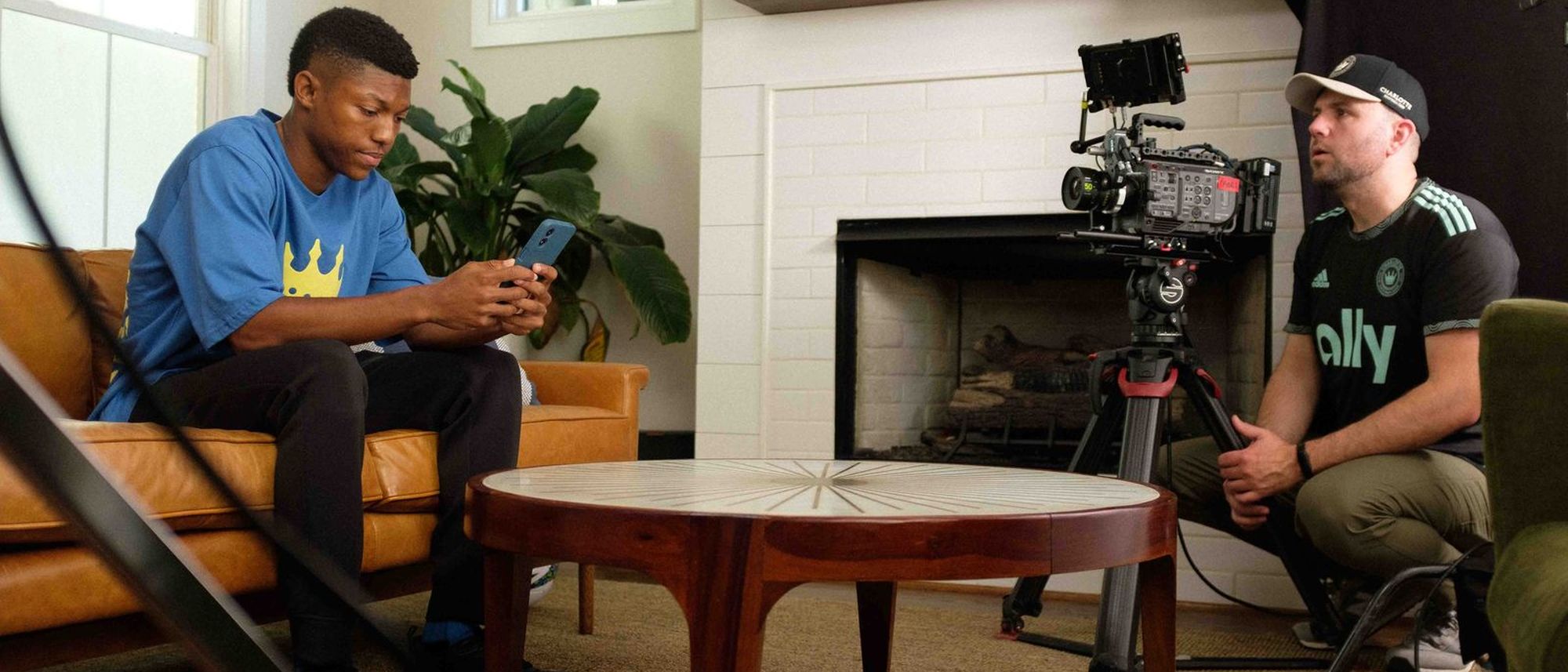
For a client, that partnership provides two things at once: attention to the creative and someone accountable for getting the production across the finish line.
It also clarifies whom to talk to. If a line feels wrong or a scene is missing the point, raise it with the director. If an executive has to leave early or a location becomes unavailable, tell the producer. When the change affects both the story and the plan, the two should solve it together and bring you a recommendation.
The work continues in post-production
After the shoot, the director works with the editor to shape the story. They review structure, performances, pacing, music, graphics, and the choices that make the piece feel coherent. The director helps determine which moments best serve the original objective, even if that means leaving a beautiful shot out of the final cut.
The producer manages the process around that work. They coordinate edit schedules, collect feedback, track revisions and approvals, and make sure the final deliverables match the agreed scope. That may include a main film, shorter edits, captions, and files prepared for different placements.
Post-production is also where the client sees how the plan comes together. Clear review rounds and consolidated feedback help the creative team make useful changes without losing the purpose of the piece.
What should you ask before hiring a team?
Job titles alone will not tell you how involved someone will be. On a smaller project, one person may cover several responsibilities. On a larger campaign, there may be multiple producers and additional creative leads.
Ask who will lead creative development, who will be your day-to-day contact, who directs on set, and who guides the edit. Find out how the producer and director work with your stakeholders when a decision changes the scope or the story. Ask when you will review the concept, script, or storyboard before production begins.
At Digital Spark, we build the team around the assignment and keep leadership involved from strategy through delivery on every motion project. That lets us develop an idea with a client or take an established concept into production, with a clear path through the shoot and the final edit.
If you cannot tell who is making the creative decisions, who is accountable for the plan, and who will guide the work after the shoot, ask again before signing. Those gaps rarely get easier to resolve once production is underway.
In summary
- The director leads the storytelling and guides the creative choices from concept through the edit.
- The producer makes the work possible by coordinating scope, people, schedule, resources, and approvals.
- Both roles begin in pre-production, work together on set, and remain involved through delivery.
- Ask who owns the decisions at each stage, especially when a change affects both the story and the scope.


